

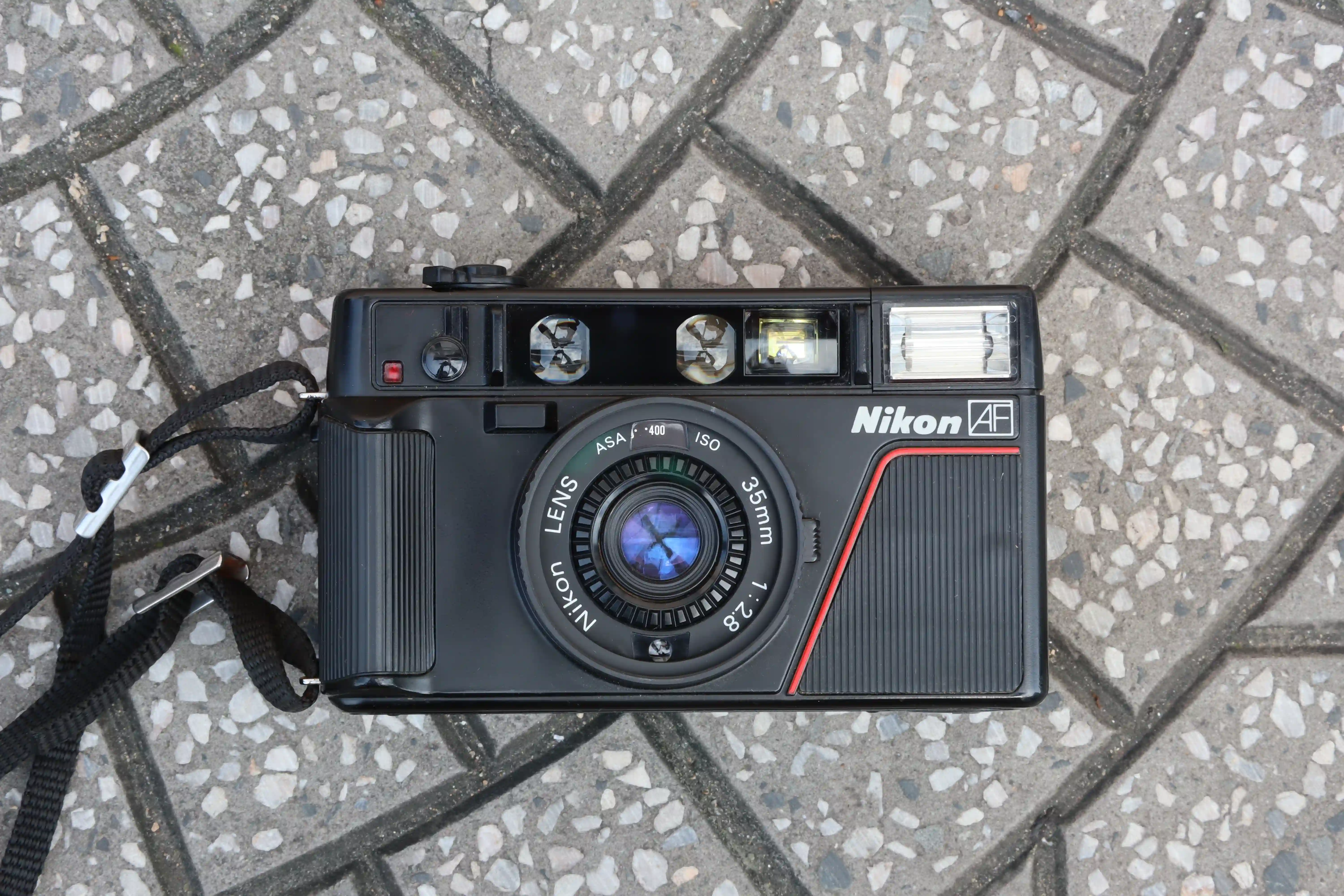
1. History of Nikon L35AF/AD
Around the 1980s, the era of PnS (point and shoot) film cameras with autofocus (automatic focus) was beginning. It started with Canon with the Canon AF35M produced in 1979 after 14 long years of research and development!
But if Canon calls, Nikon will answer. 4 years later (in 1983), Nikon launched its first compact autofocus named the Nikon L35AF, nicknamed “Pikaichi” (which means "most excellent") in the Japanese market. With that name, Nikon places this machine in its high-end PnS segment. The retail price at launch was about 30,000 to 35,000 Yen (about 18-20 million compared to the current price).
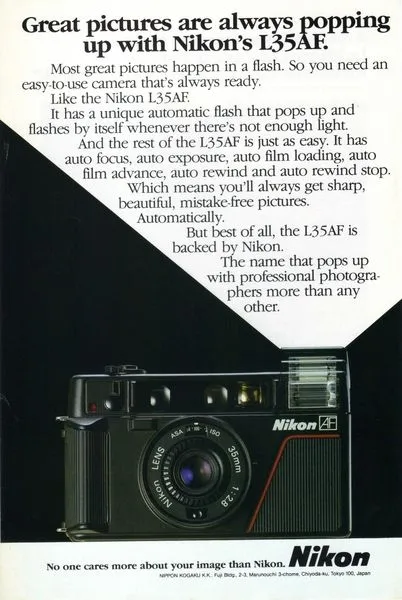
Almost immediately after the launch of the NikonL35 AF, the company launched an additional version of the Nikon L35 AD. The difference lies in the back (rear) of the machine, the AD version will have databack to print the date on the photos.
2. Image quality of Nikon L35 AF/AD
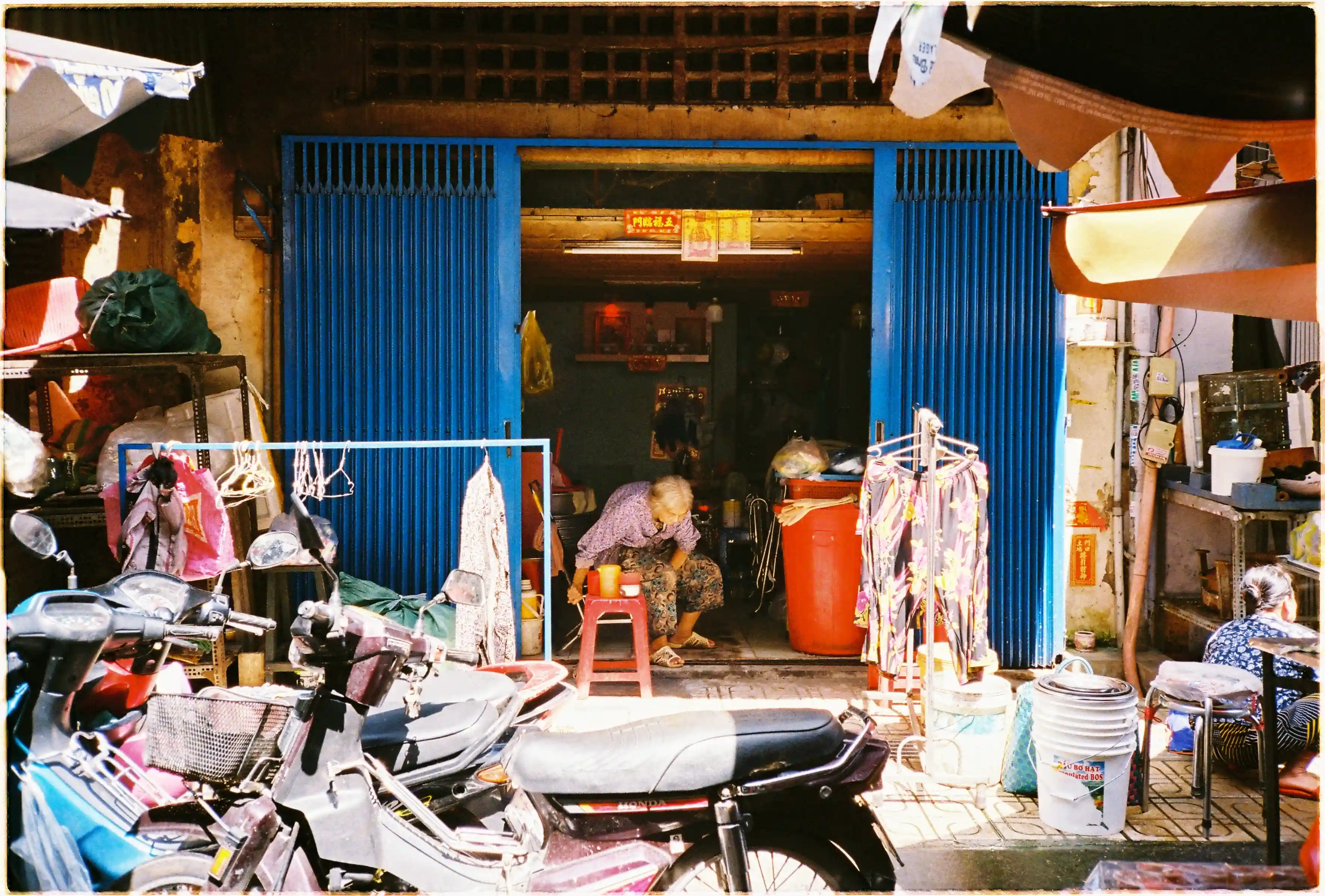
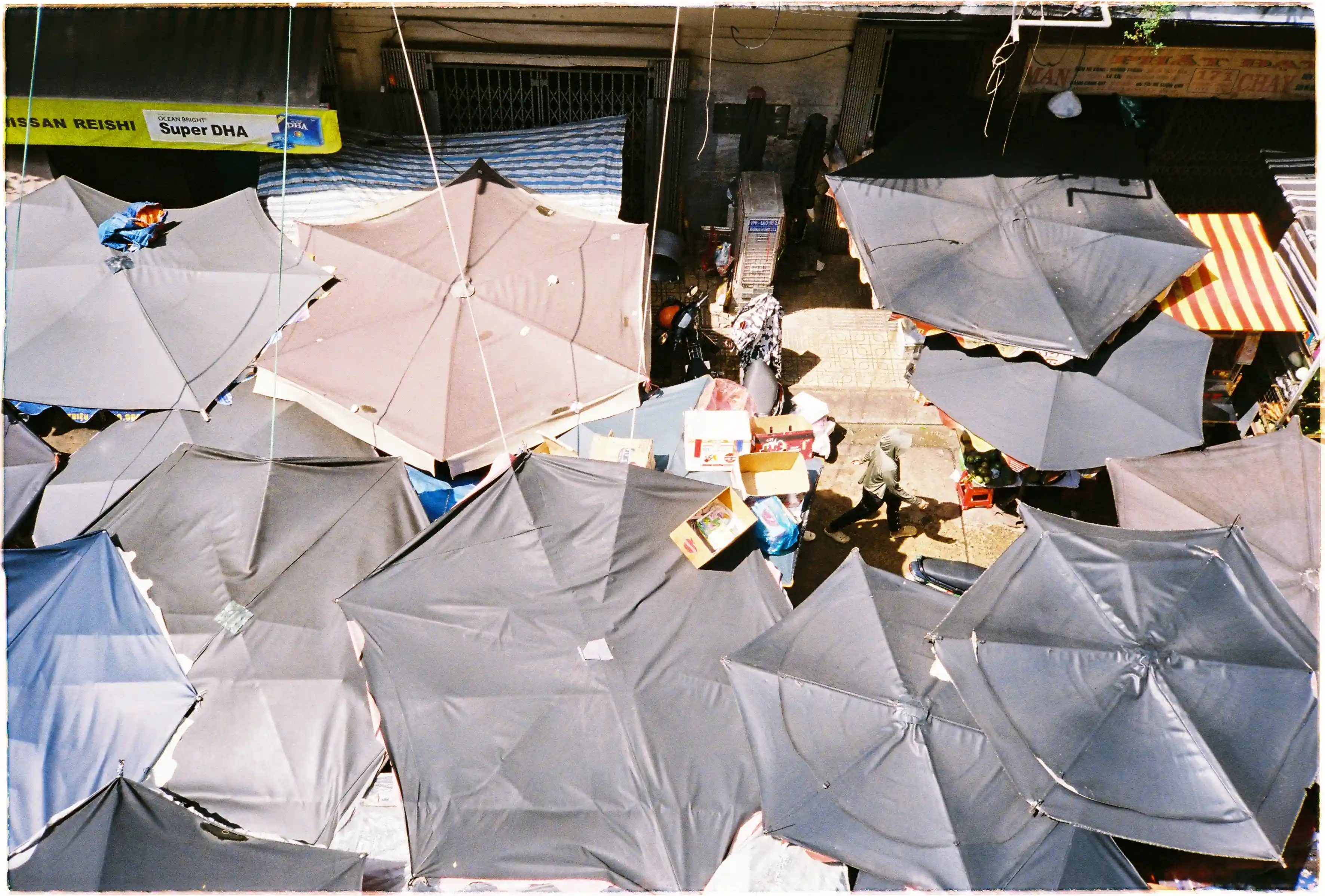
As mentioned above, Nikon put a lot of enthusiasm into this camera, so the quality is excellent. When it's bright enough, the colors are rich, the contrast is good (even though I only used Fuji 400 film). This is also the only Nikon L35AF/AD series to use 5 lenses in the Sonnar structure, later generations (like Nikon L35Ad3, the Nikon L35AD2 uses fewer lenses. Maybe that's why this machine is so valuable to collectors.
The Nikon L35AF/AD lens produces rich, vibrant colors. High contrast, shadows and highlights are clearly separated without getting blown in lighting conditions that are not too complicated.

2.1 Shoot at light
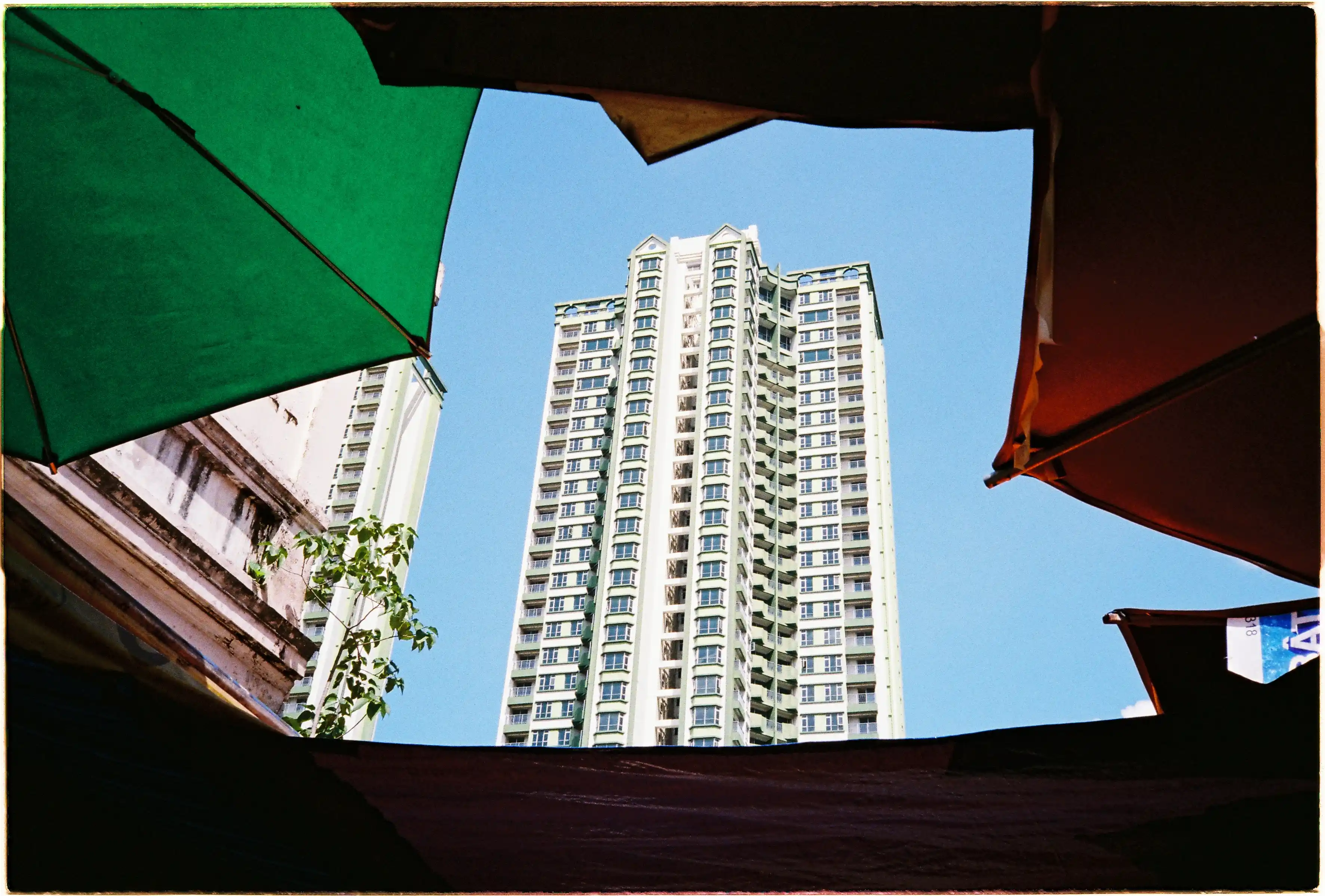

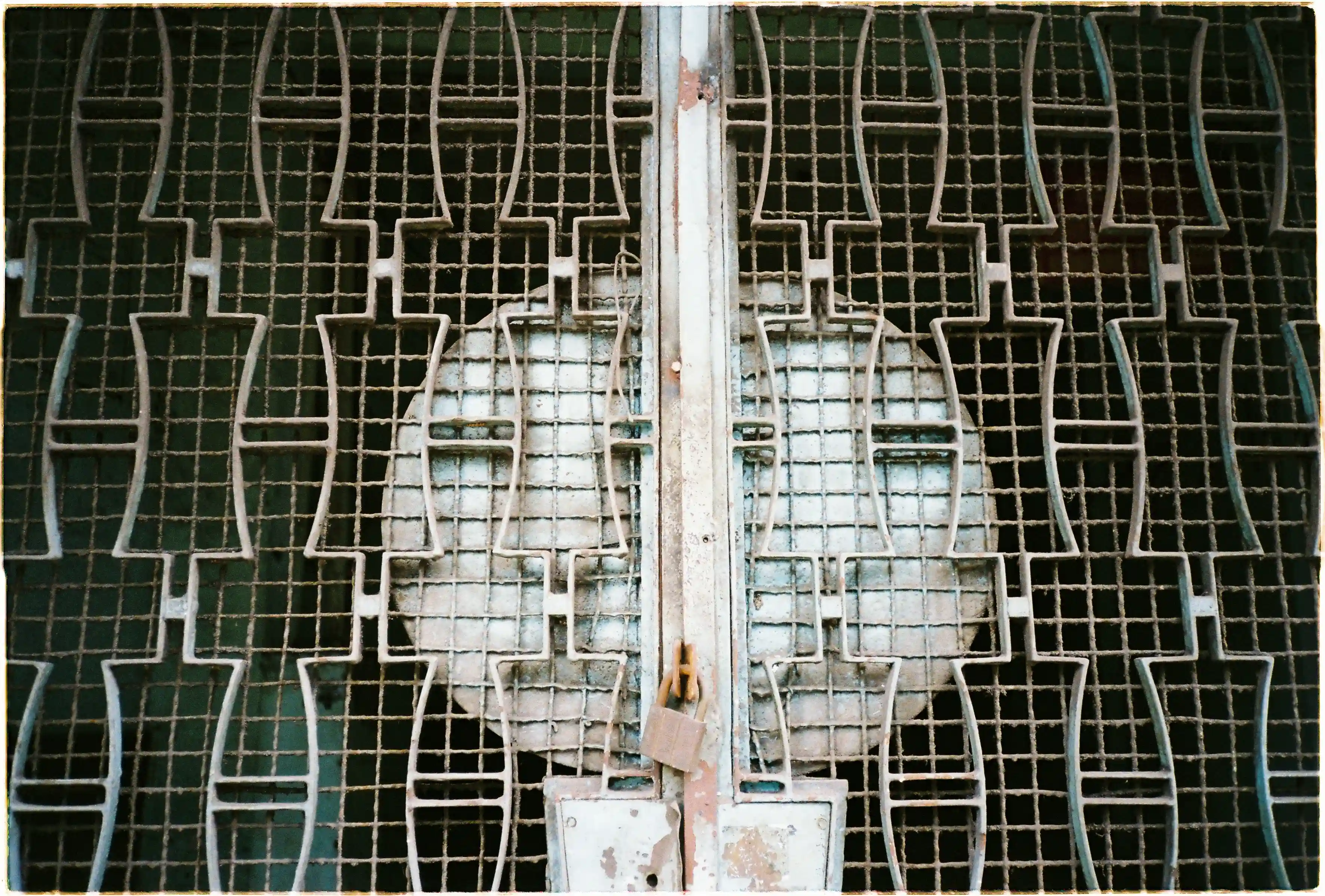
Another note for filmers is that at wider apertures, the Nikon L35AF will vignetting – the corners are usually darker than the center of the image. There will be people who don't like it, but for me, darkening the angle (slightly) creates the feeling of the photographing is even more "film"! Furthermore, thanks to the 35mm focal length, the vignetting effect is not as obvious as the 28mm cameras (Fuji Everyday OP for example)
2.2. Shooting against light
Even in complicated backlight + light cases, the Nikon L35AF/AD can handle the details in dark areas well, although ghosting in the canopy can be limited by attaching an additional hood if necessary. This is a plus point because the Nikon l35af in particular and the nikon l35 series in general supports the attachment of additional accessories such as hoods, filters with screw threads to optimize functionality when compared with Canon Autoboy 3 good Fuji Tiara Mini good Fuji Everyday OP...

2.3. Shooting With Flash
The flash is the type that is activated automatically when the environment is too dark. However, the machine does not have a separate flash off button like Canon Autoboy 3. If you need to turn off the flash: a little tip is you can take your finger to press the flash down so the flash doesn't ignite the light. The machine will self-understand and adjust other parameters accordingly. But you need to be careful because it will be easy to go out if using this option. In the 3rd generation of the machine (L35ad3), Nikon newly launched a more convenient flash-off feature!
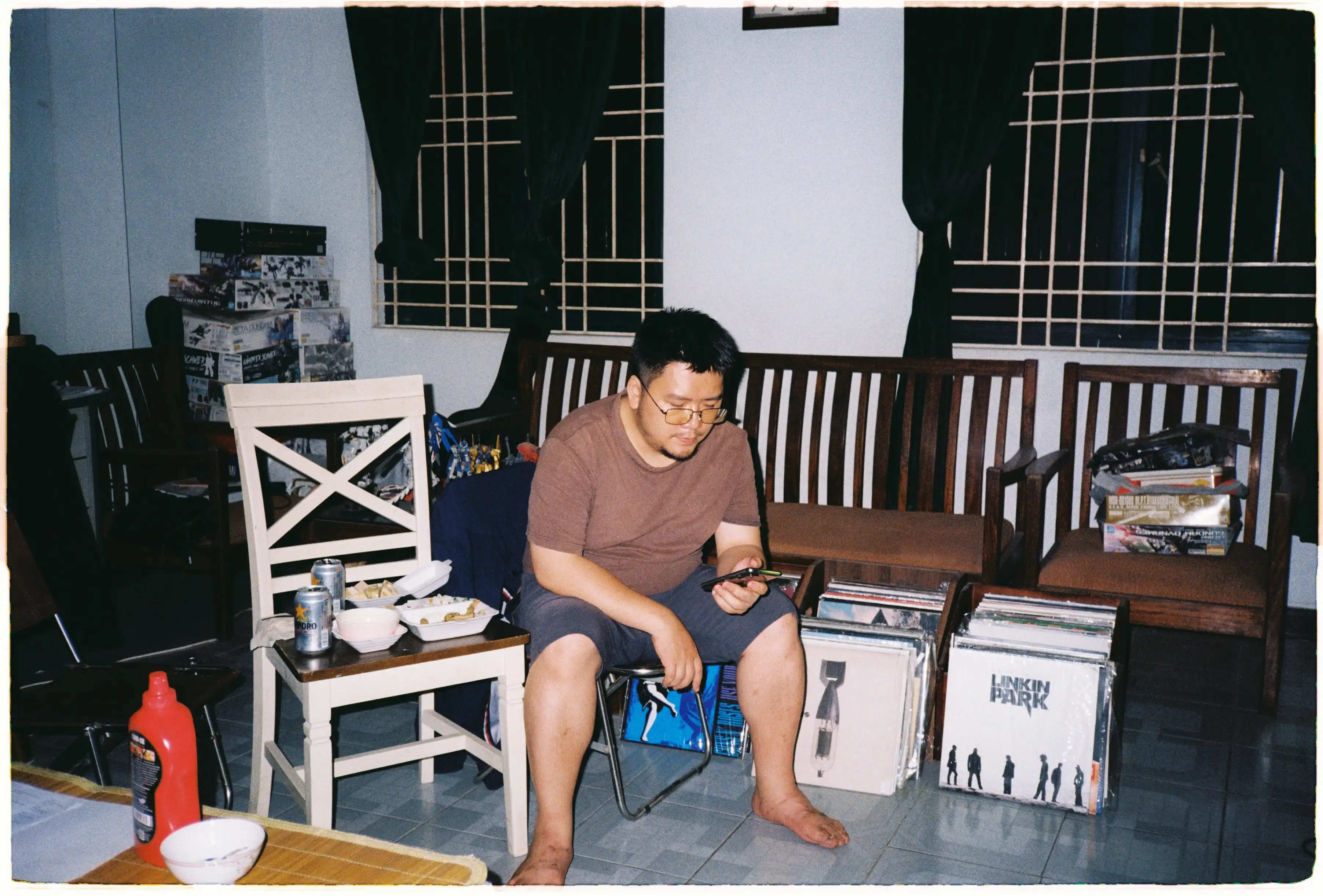
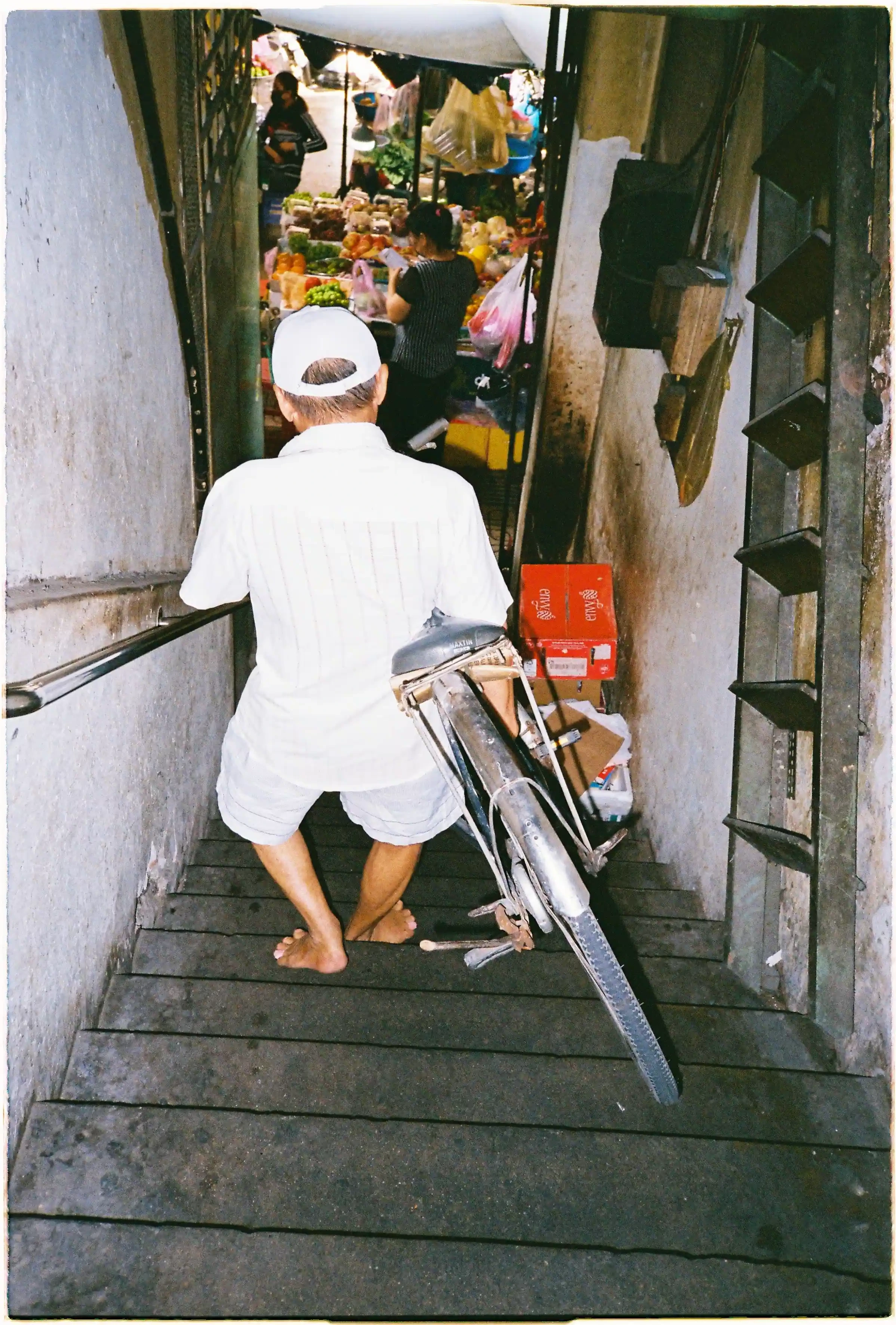
As in the picture below, I forced the flash not to turn on, so the camera automatically set it to the largest possible aperture with the appropriate shooting speed. This makes the DOF (depth of field) no longer the necessary thickness (as compared with flash - because when flash fills in, the DOF will be very thick). This results in the photo being slightly out of focus.

Personal experience: During the shooting process, especially with vertical photos, sometimes my finger accidentally presses on the flash causing the flash to not turn on (even though I didn't intentionally turn the flash off). From then on, when taking vertical shots when the environment is low light, I only use one hand to avoid this situation.
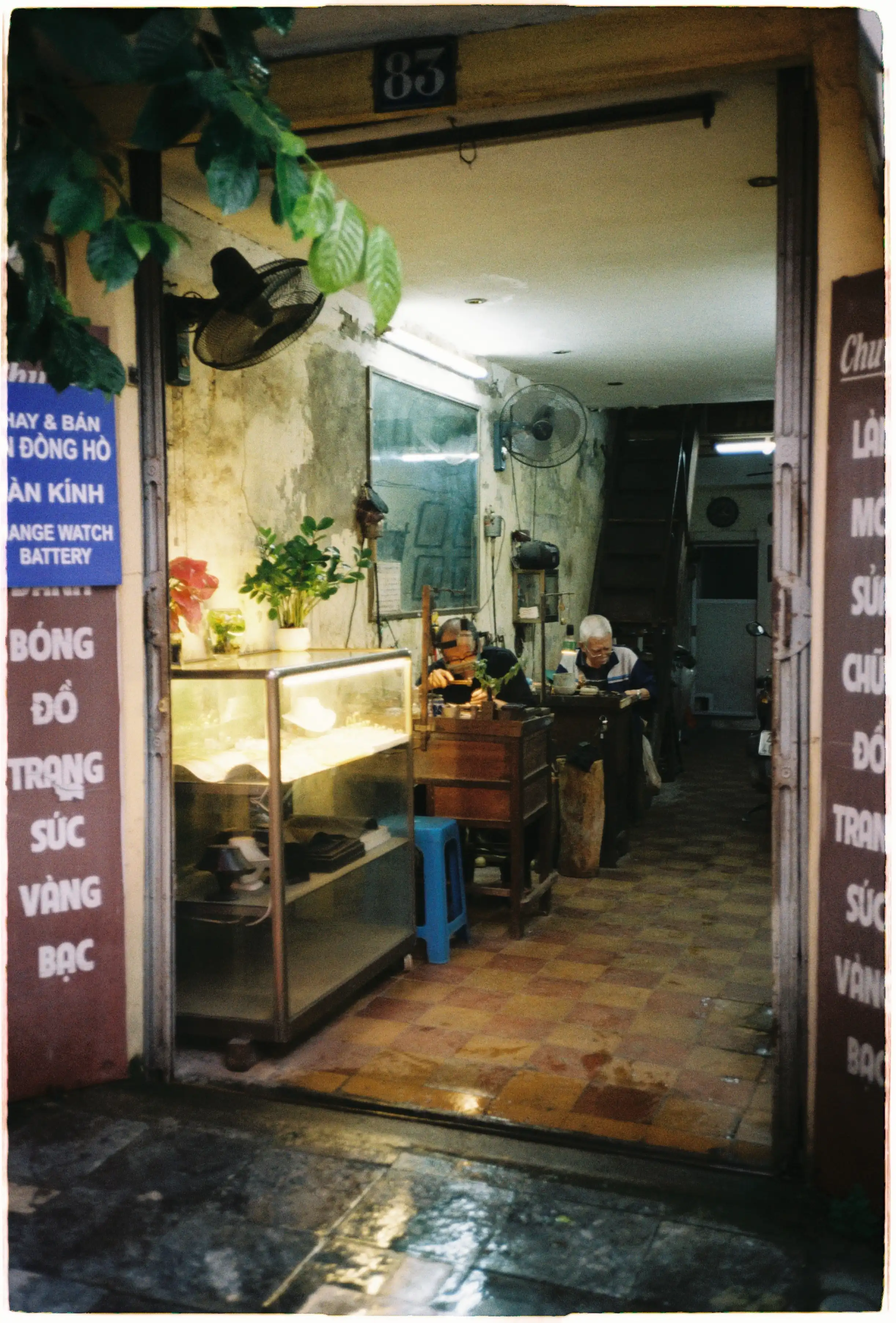
3. Overall Design of Nikon L35AF/AD - Grip Feeling
In terms of design, the Nikon L35AF/AD isn't too thin (like Fuji Tiara Mini good Pentax Espio 120swii...) so that it can be stuffed in a shirt pocket or pants but neat enough to be put in a handbag or carried in the hand. Thanks to the adequate size and grip, holding this camera feels very firm, it's not easy to slip fingers into the frame (with c Compact cameras like the Olympus XA, if you hold the camera in the wrong position, it's easy to accidentally slip your finger into the frame without our knowing). Personally, the writer produces a lot of sweaty hands, this is very annoying when I operate with too small machines because it requires a lot of dexterity, but the Nikon L35AF makes me completely comfortable when operating.
The paint of this machine is quite glossy, easy to clean, but it will easily leave fingerprints. You need to clean regularly if you want the machine to always look new.
4. Viewfinder of Nikon L35 AF/AD
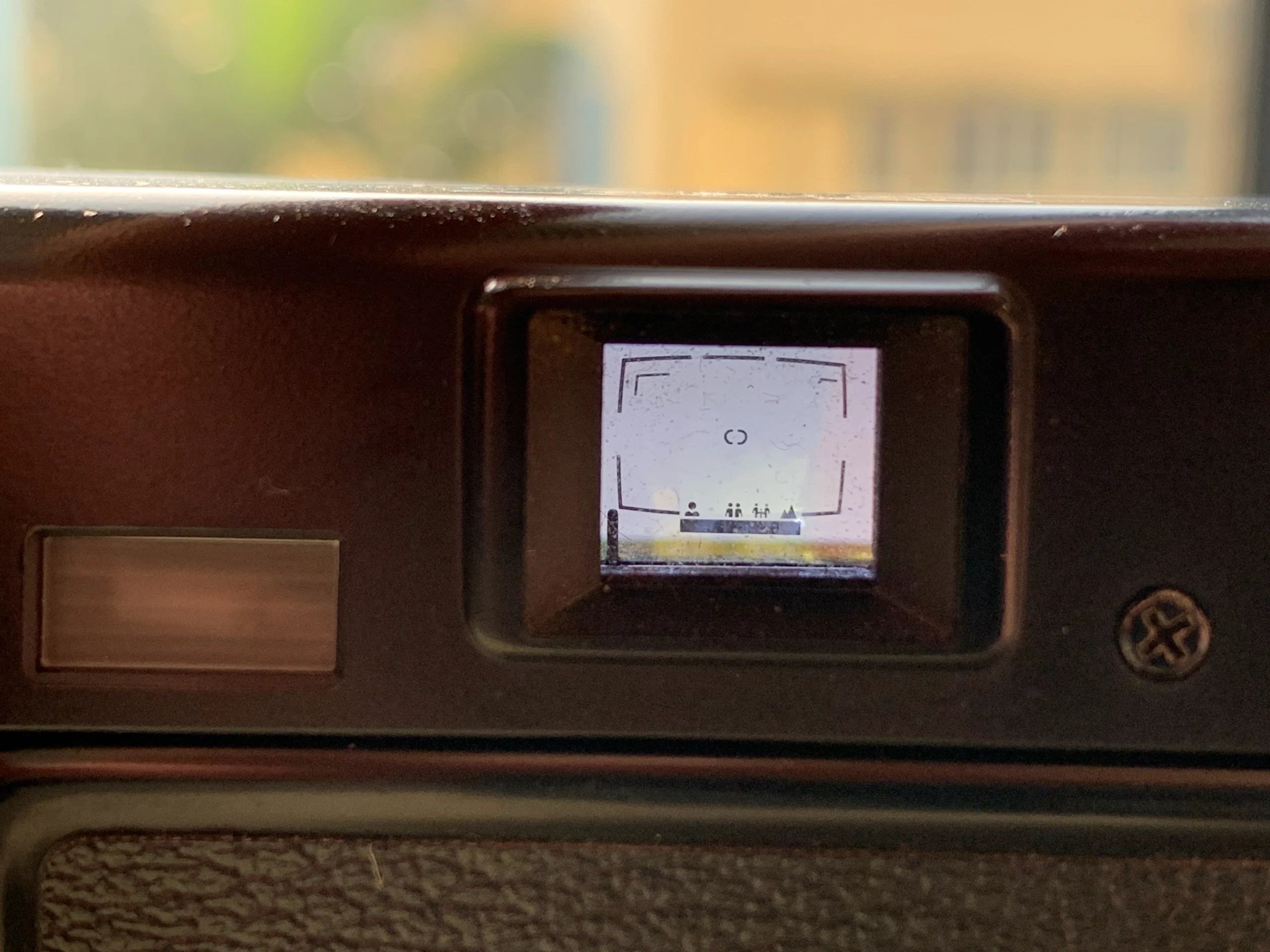
The machine's viewfinder is large and has an anti-glare yellow coating. Even when I wear glasses and shoot in many different lighting conditions, this viewfinder always responds well.
The viewfinder's construction is quite simple, consisting of the viewfinder (the small inner frame will best match the output image compared to the large outer frame) and the focus indicator. The focus indicator works effectively and accurately, helping to minimize false focusing. This is a big plus when compared to many other PnS machines of the time. Even with high-end machines like Contax T2, Fuji Cardia etc. if the camera focuses wrongly, only when the film scans will we know.
5. Auto Mode of Nikon L35AF/AD
True to the Point (point) and Shoot (shoot) spirit, you just need to frame the image to your liking, let the Nikon L35AF/AD take care of the rest. The Auto mode of the machine works correctly, the light is even, beautiful in the majority of cases. You can confidently set the ISO on the machine to the ISO box of the film. As I read, the mechanism of Auto mode will keep the camera at f/2.8 aperture until the shooting speed reaches 1/60s. When the shooting speed gets faster, both aperture and speed will increase together. In low light conditions (speed from 1/30s to slower) the flash will be triggered. If we don't shoot flash, the aperture will be kept at its highest level and the speed gradually decreases from 1/30.
6. Great assistant for street photography - gentle shutter, smooth focus, quiet camera start-up sound
Another thing that makes me like Nikon L35AF/AD despite its long age and its price is not cheap, is its excellent capability to support street photography. When taking street photographs, you never want to draw the attention of others in any form. And to ease the action, the Nikon L35 AF/AD with the ultra-small start-up sound, the ultra-quiet clicking sound, the shutter sound like a whispering in the ear (of the person holding the camera) is what every street photographer wants. Thanks to that, I was able to take quite a few pictures of other people sleeping like below. Only the film winding sound is a little loud, but you can press the shooting button and go elsewhere, after releasing your finger, the machine will roll the film to the next step if you want completely quiet.


The camera's shooting button is quite deep. When I'm not used to using it, sometimes I miss the moment because I haven't pressed the button yet, but the good point is that if you forget to turn the machine off (turn the lever to Off) and put it in your pocket, it's hard to be robbed. The shutter button has a mechanism of pressing half of the trigger to focus (according to the focus meter in the viewfinder) and the remaining half is used to activate the shutter. The machine doesn't have a light metering lock function, but fortunately, we have a compensation lever that compensates +1.5 EV if it encounters reverse lighting.
The camera's focusing works on the Active AF principle (active focus - depends on the contrast of the subject to focus). Sometimes, if the subject has too low contrast or points straightly at the light source, it will easily cause false focus. When looking into the viewfinder, if you focus at closer (about 1.5m in change) but the meter is showing in the level u see a mountain shape (like the picture below), you need to refocus by releasing the button and start pressing the trigger half again.
7. Advantages and Disadvantages of Nikon L35 AF/AD
7.1. Advantage
- Using AAA batteries is easy to buy, easy to find at a reasonable price (genuine batteries like Energizer are only about 40-50k/piece) but last a long time.
- The image quality is very good with the Sonnar structure lens but the price is affordable for both collecting and shooting.
- There is a focus indicator in the viewfinder, avoiding out focus.
- Even though the shell is plastic, it's sturdy and fits well in the hand.
- Can shoot outdate movies (up to ISO 400 or ISO 1000 depending on camera model)
7.2. Disadvantages
1. No indicator insufficient closest focusing distance (80cm)
The closest focusing distance of the Nikon L35AF/AD is 80cm. In realistic shooting conditions, it is quite difficult to exactly measure whether the shooting distance is 80cm enough or not. And unfortunately, the Nikon L35AF/AD doesn't have a too close indicator or similar function. As the photo below, the soft drink bottles are out of focus due to taking too close. If you often take close-ups and are afraid of being out of focus, Nikon L35 AD3 or Fuji Tiara Mini, Canon Autoboy EPO... would be more appropriate.

2. Sometimes focusing is wrong (because the machine is also 40 years old)
As mentioned above, if the needle shows the focusing distance in the viewfinder is too different from reality (case 1: focusing on the subject near 1.5m changes again, but the needle points at infinity – the mountain shape OR case 2: focusing the scene far out but the needle focuses on the head symbol). To fix, you restart the focusing process by releasing the shutter button and pressing the shot again from the beginning.
3. The battery cover and battery cover retaining lever are likely to be damaged as the material degrades over time
With the L35AF/ AD machines produced at a later stage, the manufacturer reinforced with metal clips so this weakness can be limited.
4. The zinc cover of the machine can fall easily if the cord is not hooked or put away
5. There is no flash ON/OFF button that must be pressed manually.
8. When Should You Buy Nikon L35AF?
If you:
- Like the nostalgic, analog look
- Want to adjust ISO (to play outdate movies/ compensate light as desired)
- Sonnar-style lens formula (5 lens)
- Like to take a little overexposed photos
=> Nikon L35AF is the machine for you!
9. Where to buy Nikon L35AF?
If you still have questions about the Nikon L35AF film camera or simply want to buy it, message me at Facebook Katreview, Thread KatReviewVietnam or Instagram KatReviewVietnam so I can advise more.
10. Instructions for use and structure of the sides of the Nikon L35 AF/AD
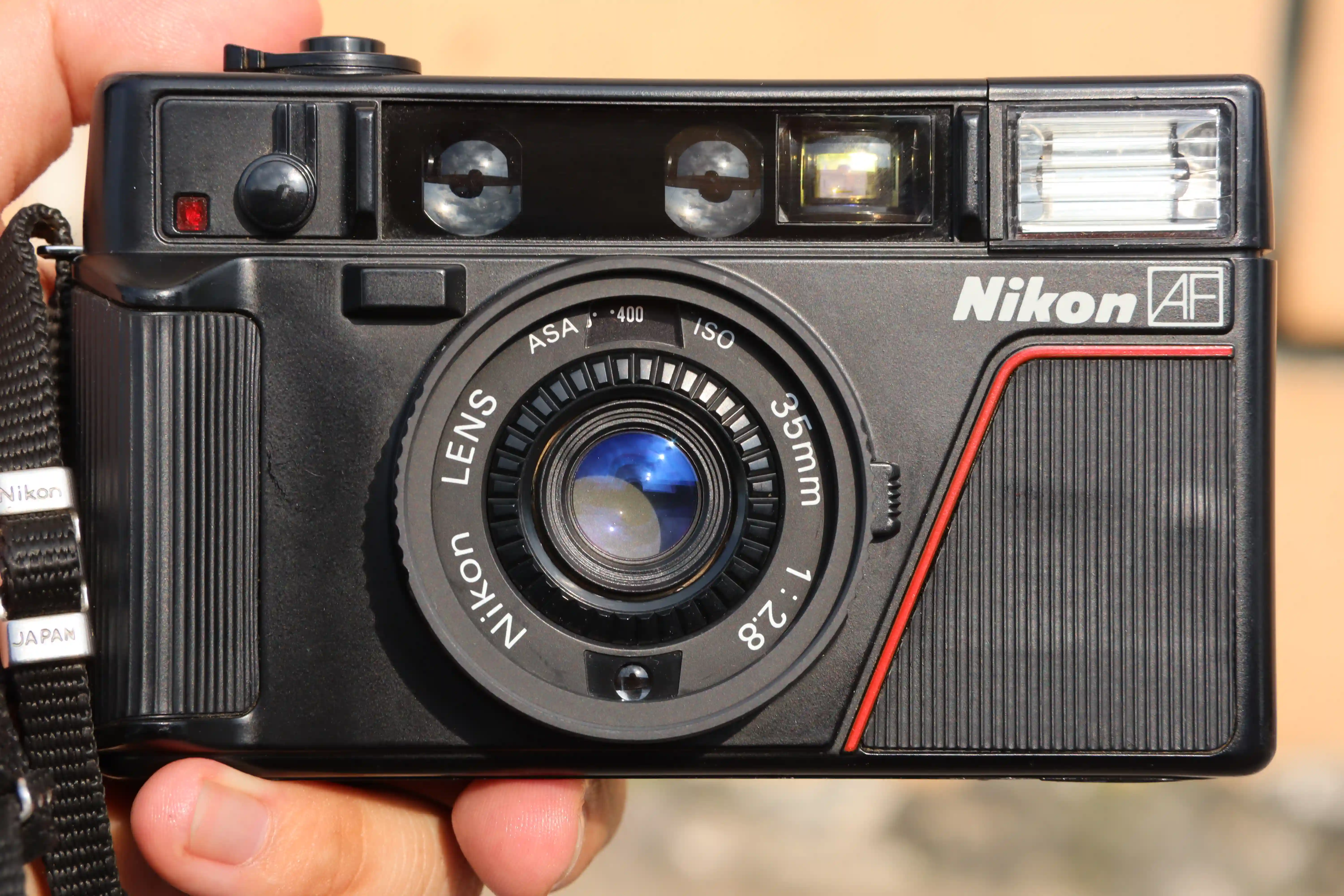
On the front, we have lens, flash, Nikon AF logo, iso dial, timer lever and light meter. In the lens part of the camera, we can attach the 46mm filter and 46mm lens cap to protect the lens inside instead of using the zinc cap that comes with the camera. I once lost the zinc cable that came with the machine because of carelessness, even when I was only walking around for about 5 minutes. Or you should tie a string connecting the cap and the body to prevent it from falling. Around the lens and the rotation ring there are ridges to adjust the iso corresponding to the type of film used. The timer lever will work when you slide the lever towards the left, the timer time is 10s.
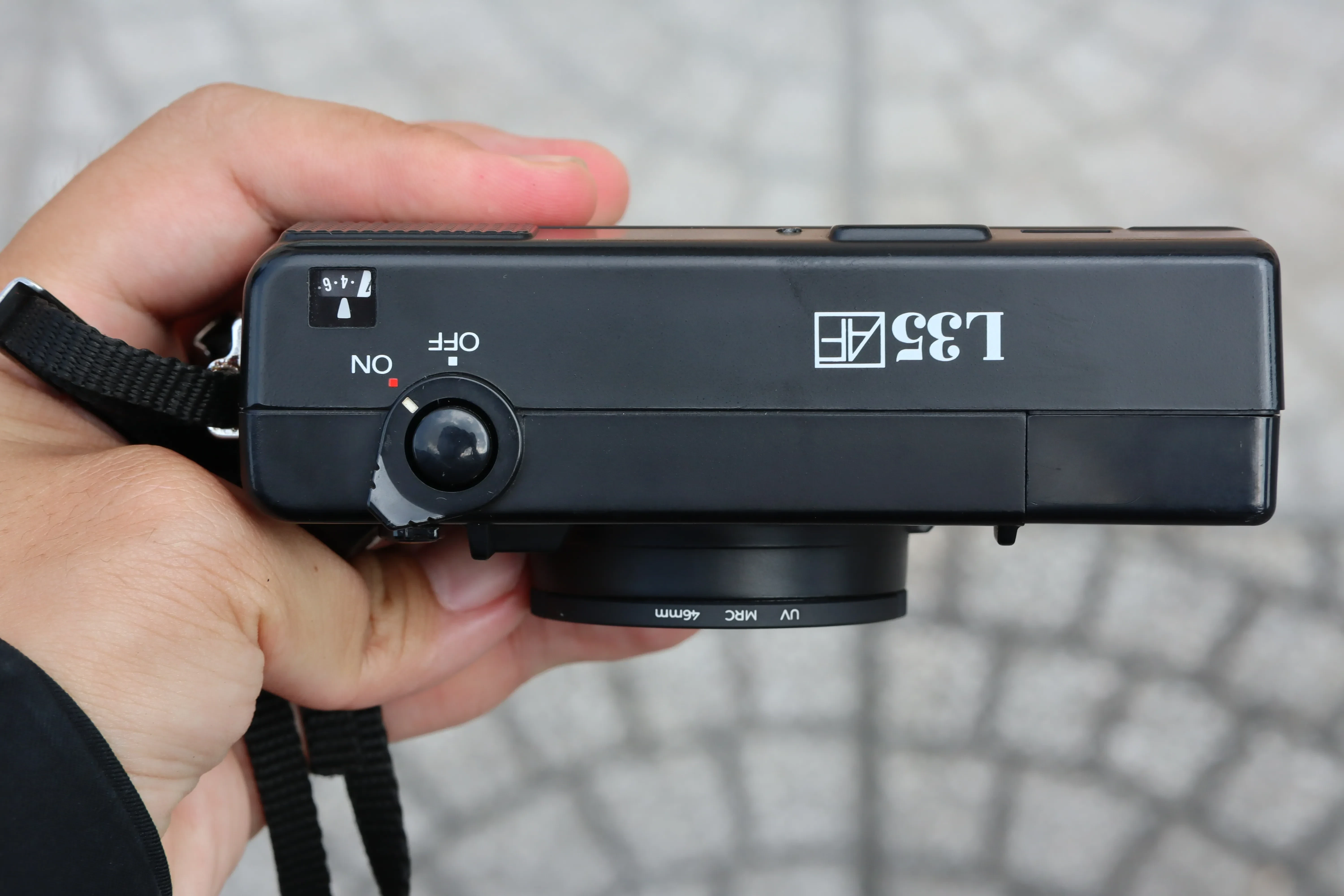
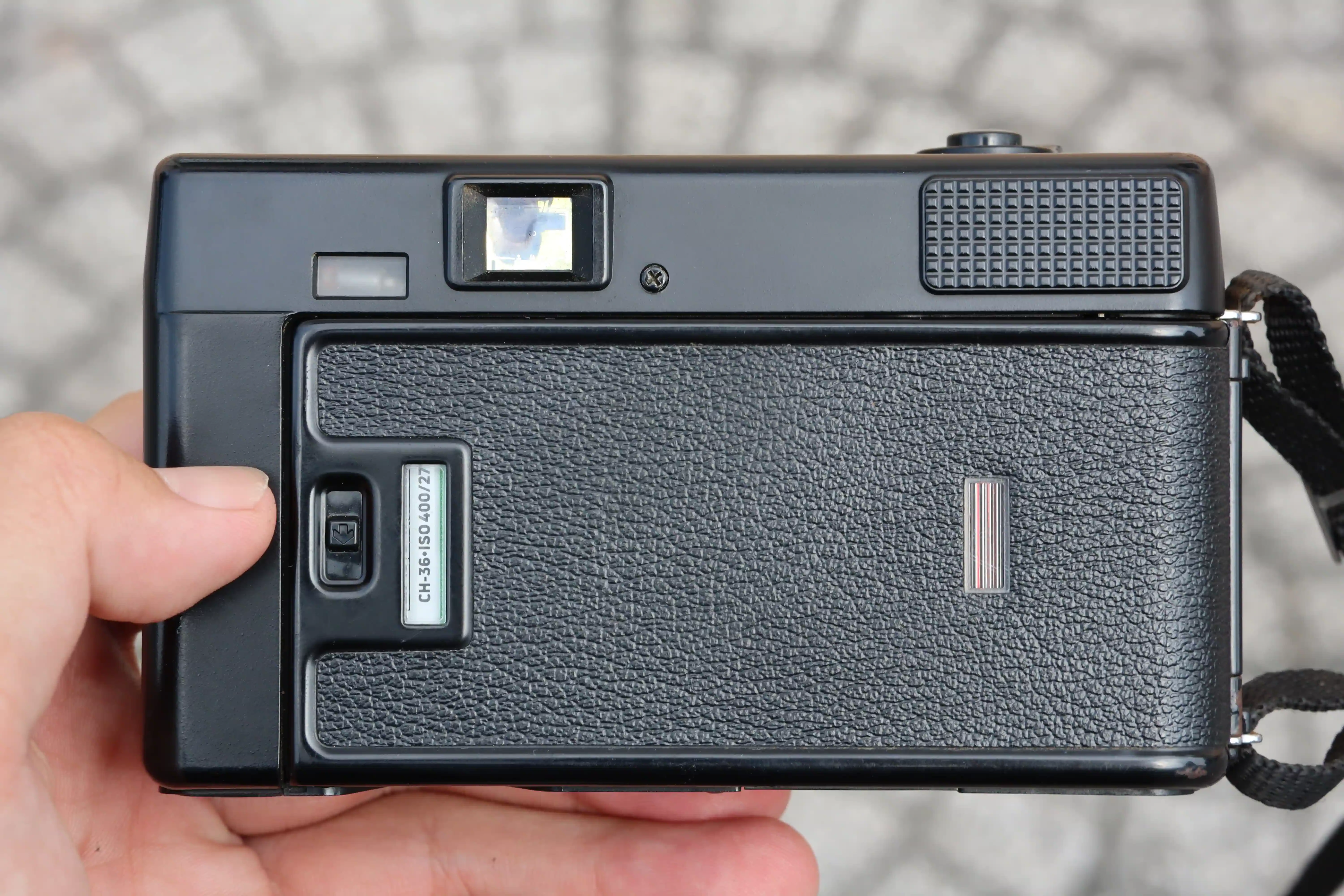
On the back, with the L35AF version I have, we only have movie viewing window, viewhole, flash loading indicator, finger grip and back lever (with the L35AD version, there will be the date print). The lever holding back of the machine is sturdy, I've never had the back uncover suddenly when storing it in my bag or operating in my hands. When opening back, we load the film in the left compartment and pull the film out to the red line on the right, close the cover and press the shooting button to fasten up mode number 1 to start shooting (You can watch the video below for easier visualization). However, you should note that the first 2-3 styles will be burned, so the camera lets you take up to the 37th-38th styles to compensate.
In the L35AD version, there is a square to check film rewinding. Previously, if the film was loaded correctly, this circle would rotate, but if the film was slipped, it would not rotate.
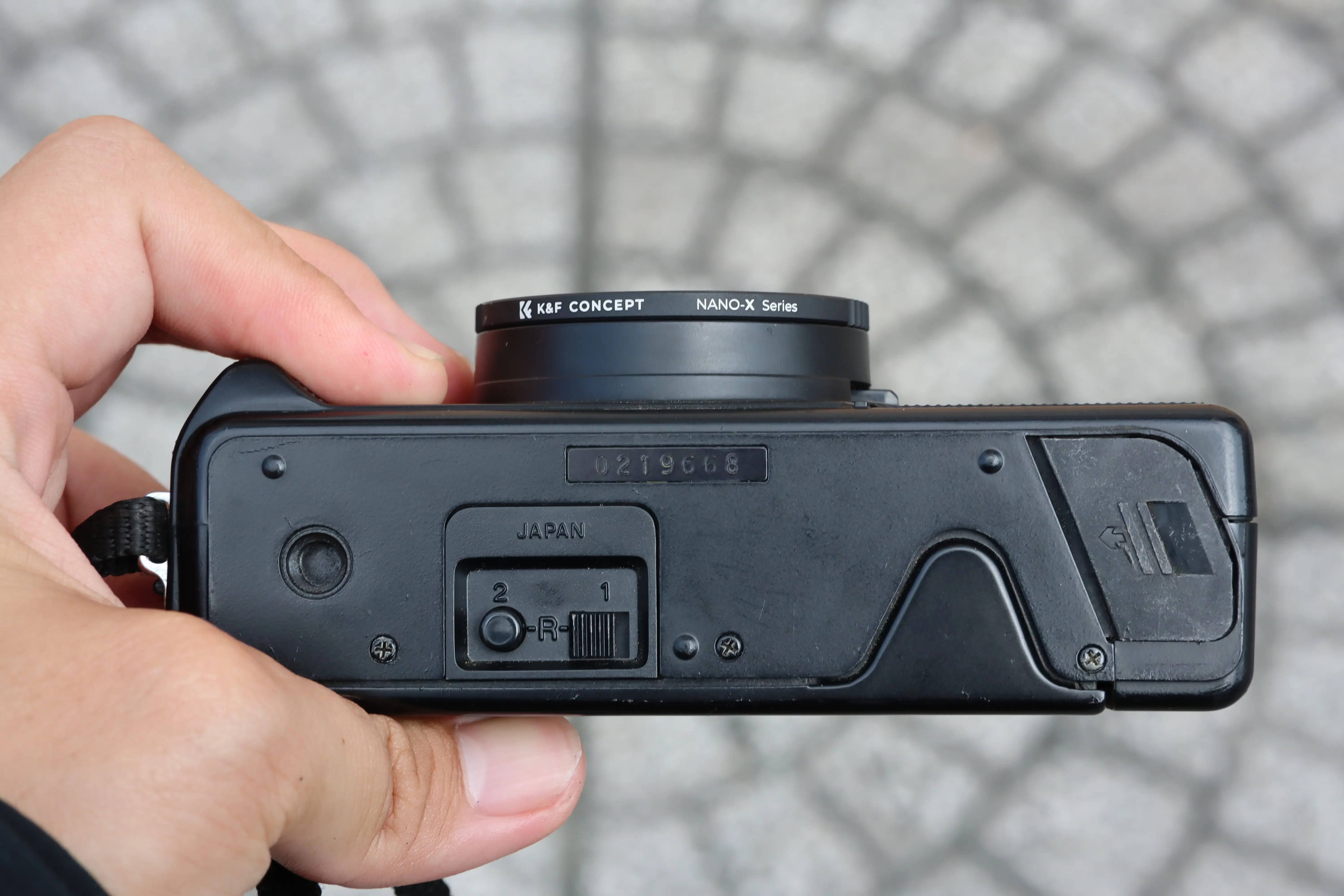
What's more unfortunate is that the tripod mount button is lying to one side, sometimes it will cause discomfort during the process of alignment, use (or simply misaligned, making you uncomfortable because of OCD).
The machine uses AAA battery, the manufacturer recommends using 1.5V battery, so you should not use rechargeable battery (because rechargeable battery only has 1.2V voltage). There are many users complaining that this battery cover will be easily broken over time (I have never experienced it). In unfortunate cases, you can repair or contact film camera repairs in Ho Chi Minh City or Hanoi or Dalat to handle it.
With the early Nikon L35AF (iso 400 version), the lever holding the battery cover was mostly made of plastic. Over time and external force, this plastic lever can wear or break, causing the battery cover to not close (INSERT PICTURES)
Every time you want to rewind the film (whether you've captured the full roll of film or not), you just switch the number button (1) to the other side, hold and press the round button next to the machine will start rewinding the film.
Nikon L35AF/AD technical specifications
- Camera type: 35mm compact, point and shoot film camera with autofocus (autofocus)
- Lens: Nikon Nikkor 35mm f/2.8, Sonnar-style design consisting of 5 lenses designed by Koichi Wakamiya
- Aperture: f/2.8 to f/17
- Shutter speed: 1/8 second to 1/430 second
- Focus: Passive autofocus (passive AF), focusing range from 0.8m to infinity
- Film ISO: Manually set the film ISO via the rotating ring around the camera's lens. ISO from 100-400 or from 100-1000 depending on the machine version.
- Flash: Flash pop-up automatically, flash charging time 5-15 seconds. You can press the flash down manually if you don't want to use the flash.
- Timer mode: Self-timer 10 seconds with indicator light
- Light metering sensor: Automatic control according to CdS, EV range from 6 to 17 (with ISO 100)
- Batteries: 2 AA 1.5V alkaline type batteries for the main machine (you should not use rechargeable batteries because the voltage is lower - only 1.2V), 1 CR2025 battery for databack of the L35AD version
- Dimensions: 124mm (Width) x 73mm (Height) x 45.5mm (Thickness)
- Weight: about 335 grams (excluding battery)
Bình luận
Đang tải bình luận...